
March 6, 2026
Volume 04 - Issue 09

This week I’m loving
This week’s love goes out to this gem that popped up in my LinkedIn feed and resonated deeply with my identity as a generalist. The premise was the idea that organizations design roles to try to put people in boxes, failing to recognize the true capabilities that people actually bring. What if we designed organizations differently? The transition to skill-based employment is happening and I am hopeful that more and more organizations will have greater recognition for what you truly bring instead of the box they try to fit you in within a very near future. But in the mean time, I hope this visual satisfies you as it did me.

Image credit: Liz Fosslien for Corporate Rebels
From the Practice
This week’s From the Practice is sparked by a post from my friend Benjamin Chan discussing resilience. Coincidentally in my inbox was an issue of Strategy & magazine with an article discussing resilience as a skill originally published in 2020.
As we dream of a skills-based economy something stands out to me that demands clarity: the need to differentiate skills, behaviors, and assessments. If you are interested in becoming a sought after project manager with future-ready skills, which I assume is why you read this newsletter each week, this distinction must be ingrained in your daily approach.
In the Strategy & article, authors Azeem Azhar and Ceir Ann Droog discuss resilience as a skill. But they also suggest “some people are naturally resilient”. I agree with the idea that resilience is a skill, but I don’t agree that people naturally have this. We are not born with skills. We may be born with a talent capacity, otherwise known as an aptitude which can be shaped through training and practice into a skill. We are not born with skills themselves. This draws attention to an important distinction between “naturally resilient” teammates and those cultivating the skill later in life: upbringing.
There is a natural aptitude that relates to resilience and it is called Grit. Angela Duckworth characterizes this as the combination of passion and perseverance in her book titled “Grit”. Angela believes that grit can be cultivated and that it is done so through training in adults and upbringing in children. Exposure to opportunities that reinforce passion or perseverance or the combination of the two is the magic here.
Ben brought up the idea that resiliency could be interpreted as or mistaken for stubbornness. Stubbornness is definitely not a skill, instead it is defined as being unwilling to change one’s mind, actions, and/or attitude within a given context. In actuality, the actual act of being unwilling to change one’s mind is a behavior known as obstinacy. When we characterize someone as “stubborn” we are actually carrying out an assessment of their behavior that presumes that their obstinacy is without justification. For example, I could be dogged about telling the truth of a situation and be perceived as “stubborn” by someone who has a different perceived truth. When in actuality I am behaving obstinately because I am attached to my truth (often also stated as “the truth” but we’ll discuss the complexities of that some other time).
Viewing workplace interactions with the lenses of skills, behaviors, and assessments allows us to see new perspectives when evaluating interaction quality. Being conscious of the risk of assessment can help us to see and uncover biases during evaluation of workplace interactions. Getting clear on skill gaps and undesired behaviors provides us with a productive baseline from which to coach employee development.
So here’s the framework I suggest you consider as you move forward:
Skill - a learned capacity to achieve a specific outcome such as achieving a goal or completing a task.
Behavior - an observable and measurable response to internal and external environments
Assessment - an observation and evidence-informed evaluation of a skill or behavior
Other terminology that confuses this clarity:
Talent - exceptional competency in a skill or behavioral context
Aptitude - an innate predisposition toward a skill or behavioral context
When we hire or engage team members we are assessing aptitude, talent, and/or skill. Behavioral interviewing, an increasingly popular technique in modern hiring, is an effort to evaluate a candidate’s response to internal and external environmental scenarios. It potentially has a significant flaw: it relies on the detection of conscious responses, ignoring that many environmental scenarios can prompt unconscious responses which are very difficult to measure or assess in an interview setting. As projects present relatively stressful environments with plenty of unknowns, this approach in particular is unlikely to uncover the patterns that will be seen during employment as unconscious responses are triggered.
To apply this framework and reduce bias in your hiring and management practices you can use these powerful questions:
What skill do I need to acquire through this hire?
What aptitude(s) am I able to cultivate in this individual?
What are this candidate’s most relevant talents?
In this situation what is the desired behavior?
In this situation what are the potential unconscious responses?
How am I measuring this behavior?
Why did I observe this behavior?
Why am I reacting to the observed behavior in this way?
Is the combination of this individual’s skills, aptitudes and likely behaviors productive in the interactions we will require of them?
If I improved the assessment of this individual’s skills what would I be looking for?
If I improved the assessment of this individual’s behaviors what would I be looking for?
What is the first step this individual can take to cultivate the desired aptitude, skill, or behavior to be more aligned with my expectations?
The language we use around expectations, norms, and values shapes the development of skills, behaviors, and aptitudes. Objective assessment is the most powerful tool in your management toolkit.
An interesting read
Loved this little read this week that touches on what it is like to be a generalist in a world that expects a specialist storyline.
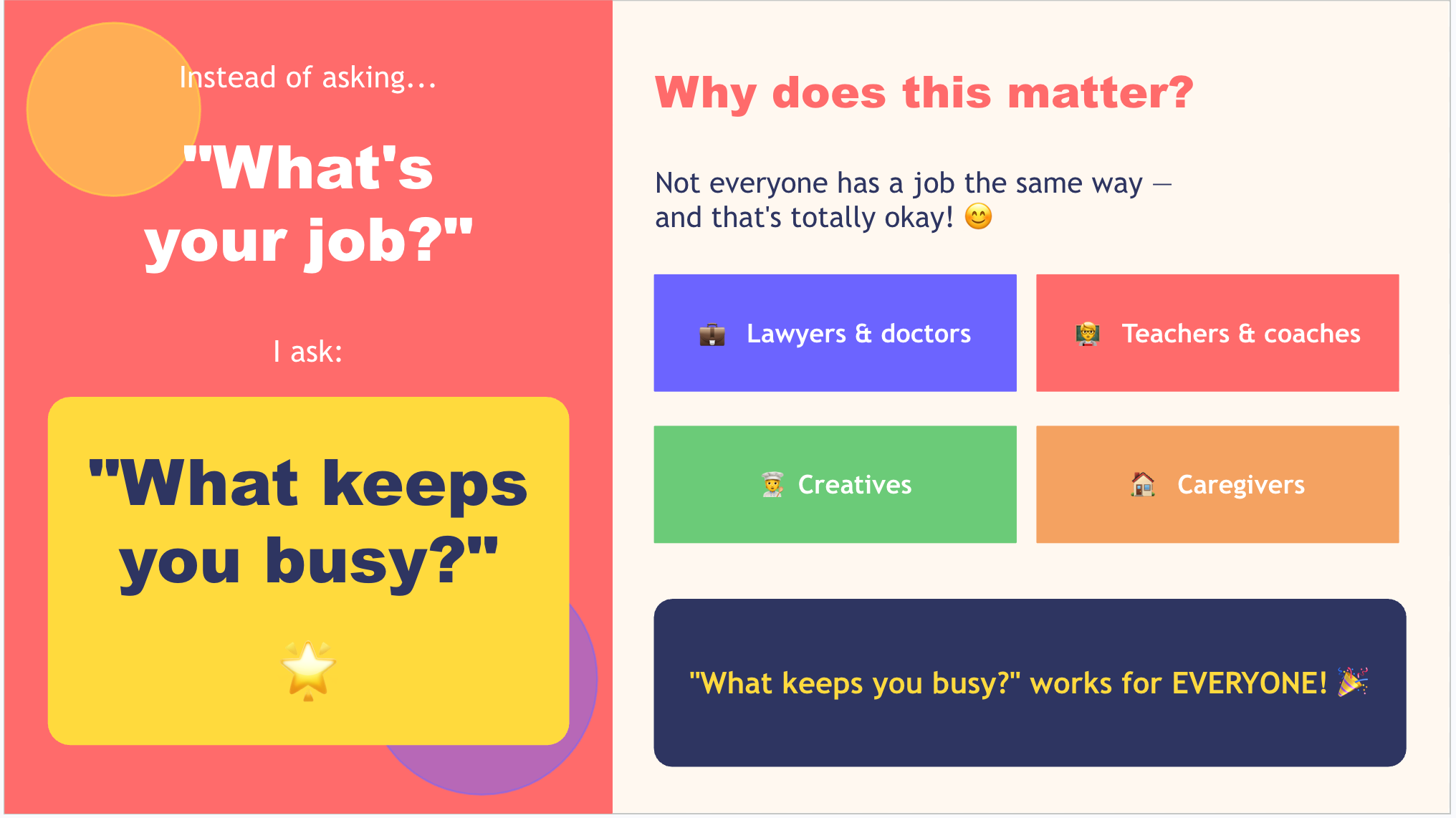
Image credit: Meg Scheding - Strategic Pivotery on Substack
This week in the Generalist World community there was some ongoing discussion about the exhaustion that comes from trying to tell your story in entirety, in ways that are understood from the lens of specialism, and Meg’s article felt like it offered a brilliant solution.
What if you could boil your story down into a slide this simple? Would it help during interviews? Family dinners?
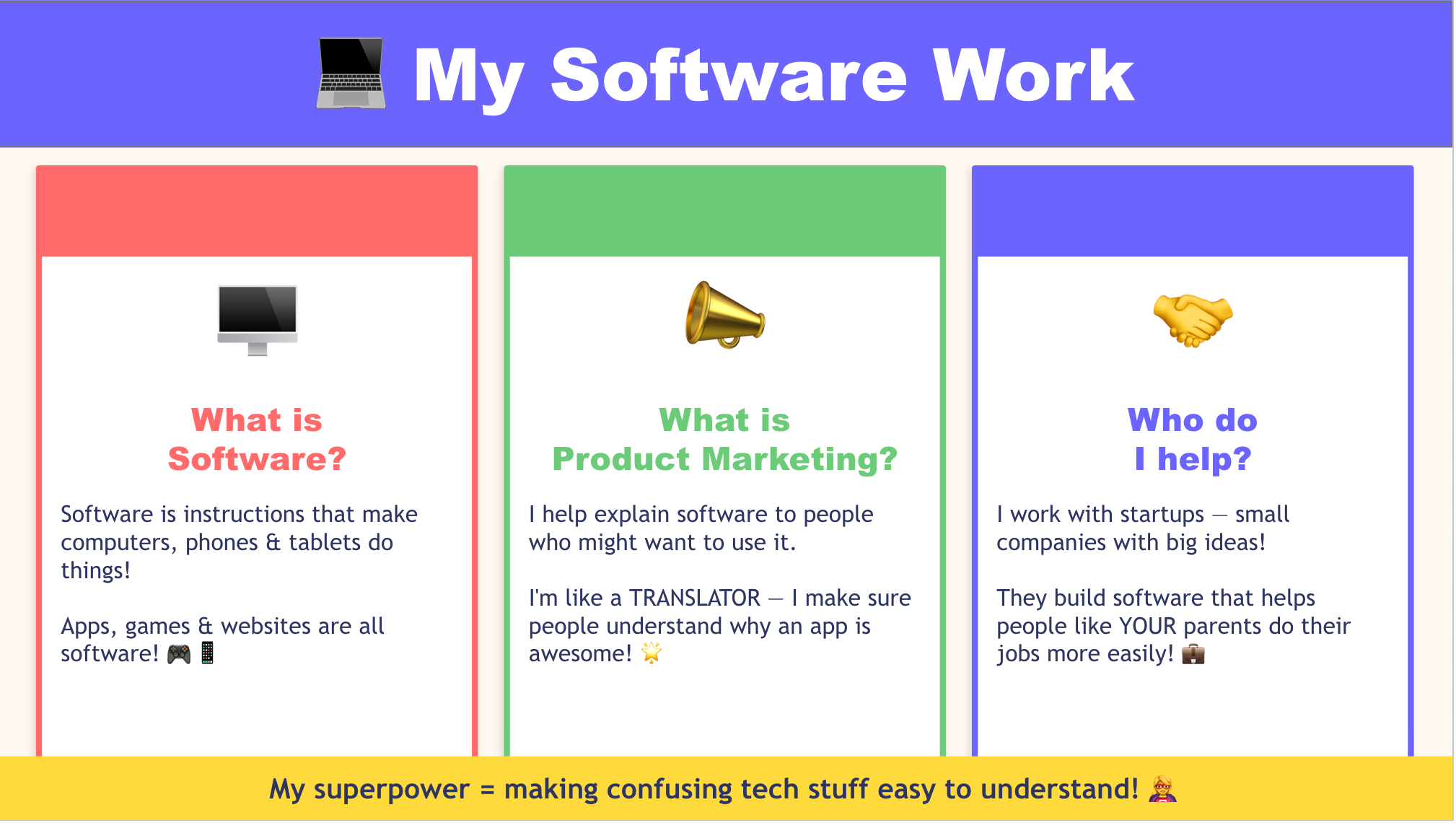
Image credit: Meg Scheding - Strategic Pivotery on Substack
I’m thinking about what mine would look like, and also which one of Meg’s hats to buy. I hope you enjoy this read as much as I did.
A tip
One of the big challenges I found in making the leap from projects into strategy & operations was terminology. As a scientist by training, project management and lived experience provided most of my business acumen toolkit, at least until completing my executive MBA last year. Metrics are a critical area project managers need to be engaged on these days but translating the lingo around common metrics can feel intimidating. Here’s a great cheat sheet I came across on common KPIs you may encounter.
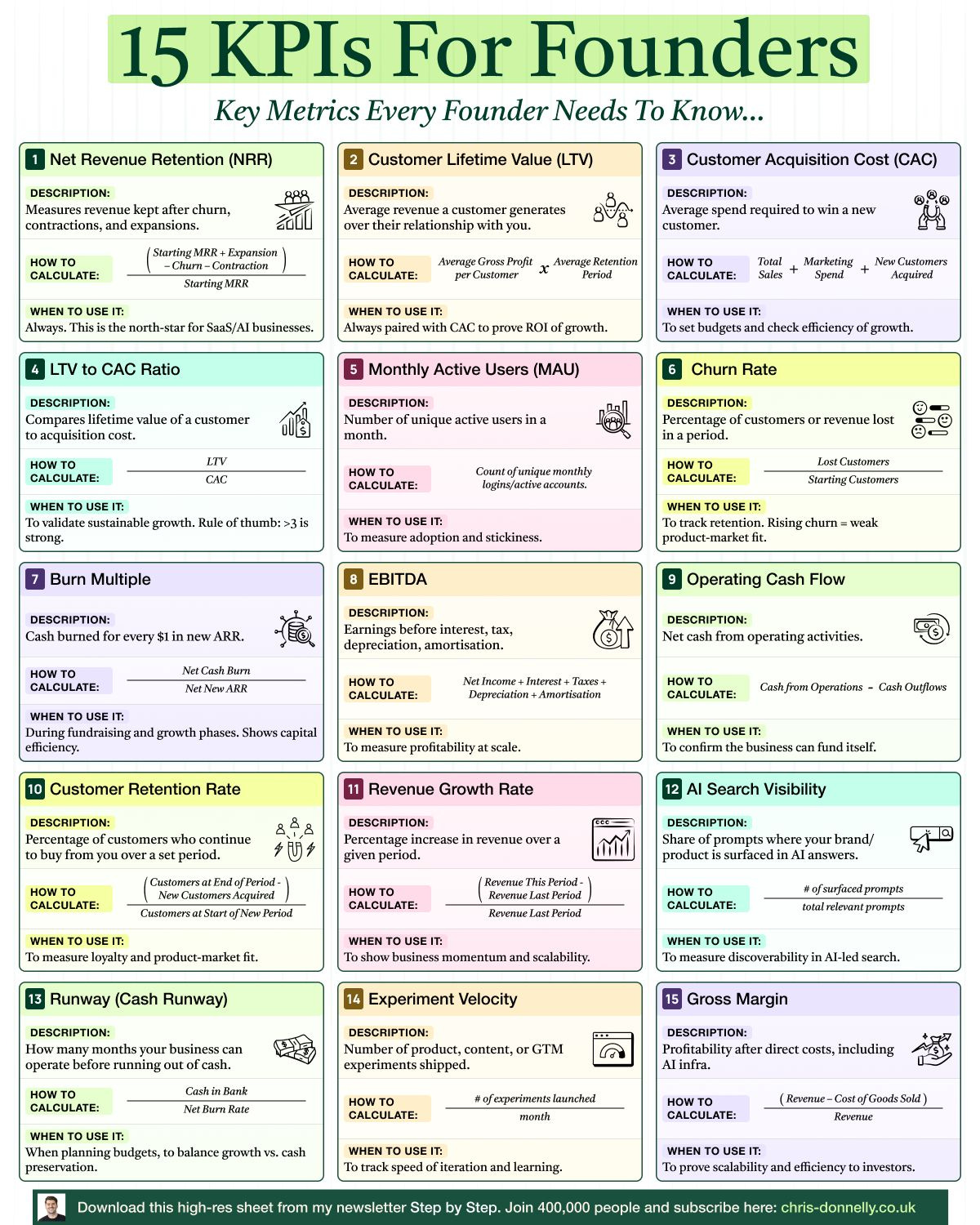
Image credit: Chris Donnelly - LinkedIn
A lesson
We close out today’s issue with a helpful lesson on the power of the straw man from Mark Warner at the Project Management Blueprint. While Mark explains the concept in the context of software development, my experience is that a straw man can be useful in many scenarios in projects. Think, a straw man governance diagram presented to early project stakeholders. Or a straw man product concept presented to user focus groups before a higher fidelity design. etc.
A simple, provisional sketch of the system forces clarity about what is in scope, what is out, and where the critical interfaces and trade‑offs lie…the [straw man] is how we draw a line around our thoughts early enough that the whole team can see it, challenge it, and commit to building the same thing.