
May 8, 2026
Volume 04 - Issue 18

This week I’m loving
This week’s love goes out to this simple illustration that made my LinkedIn feed brighter this week.
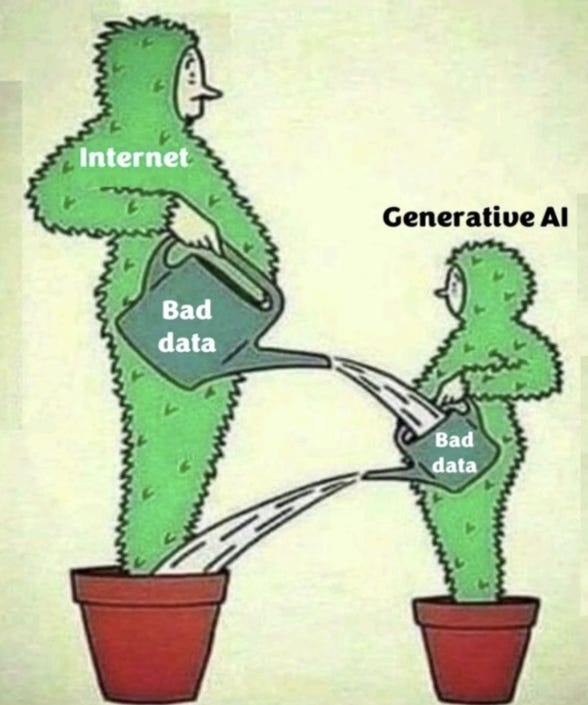
Image credit: Posted by Salman Hashmi - LinkedIn
I love when things are so simply explained by a picture that are so complex when people describe them with words. This is the most underrated skill in project management! If you work on one thing for the rest of the year make it drawing better illustrations!
From the Practice
This week I’m highlighting the intersection of several pieces I came across around one of the hottest topics in our practice at the moment: AI projects.
First, a very interesting piece from McKinsey Quarterly on where AI will create value and where it won’t. As of late 2025, nine in ten companies had deployed some AI within at least one business function, but 94% reported a lack of value from those implementations. However, the McKinsey team points out that most of these implementations were productivity focused and basic economic theory teaches us that if everyone is doing it, no one is reaping a reward.
The questions business leaders should ask are: Through which mechanisms and at what pace will AI create, expand, or shift profit pools? And what does that mean for our strategy?
Any good project manager knows that those questions get asked during project discovery or pre-project work as the business case for the project is shaped and the project charter is created.
Price Waterhouse Coopers annual CEO survey found CEOs were almost as likely to report additional earnings from AI (26%) as additional costs (22%). Only one in eight CEOs reported both higher earnings and lowered costs.
The McKinsey team found three core areas where AI steadily added competitive advantage:
proprietary data, especially where this improved performance over time
AI beneficially embedded into customer workflows that reduced incentives to switch products
faster iterative learning
Price Waterhouse Coopers reported the most common areas CEOs were making AI investments in were:
demand generation (22%)
support services (20%)
customer offerings (e.g. products, services, experiences) (19%)
strategic direction (15%)
fulfillment (14%)
There is an obvious misalignment between those two findings that every project manager should note; and in doing so, it should then not come as a surprise that Gartner found 40% of agentic AI projects will be canceled by 2027. What might surprise you is that Gartner reported that statistic in 2025. The reasons for cancelation? Escalating costs, unclear business value, and/or inadequate risk controls.
If we just stop for a moment and reflect on this, we can see that in fact this is a lack of control or direction period. If we’d been fleshing out the business case properly we’d have never got started. If we’d chartered these projects properly we’d have never gotten started.
Margareth Fabiola S. Carneiro a PMI Fellow points at a key gap:
…when a large organization decides to deploy agentic AI at scale, who manages that initiative? Are they prepared for that?
Margareth goes on to point out that many project managers have focused on AI adoption, not the management of AI projects. In fact, less than 1000 people have completed the new PMI-CPMAI® credential. And maybe like me you were a little skeptical at first about this new certification.
But on closer examination, the curriculum covers everything you need to know about data, model development, business cases, and implementation; even designing metrics to measure success. And you can learn more about the Cognitive Project Management in AI methodology for free from PMI’s website. PMI members can also access a Practice Guide for free.
So Margareth and I are rethinking an investment in the PMI-CPMAI credential, and maybe you should too.
The organizations, and the project leaders, who treat agentic AI as a delivery discipline, not just a technology experiment, are the ones who will capture that value. Everyone else will be managing the postmortem of a canceled initiative.
The writing is on the wall that project managers who master these competencies will become critical assets to every organization. Generalist PMs with big picture thinking, the ability to see through complexity, and strong collaborative problem-solving skills who invest in skills to manage AI projects will become the superheroes of the next decade.
An interesting read
As Q2 is off to the races, we are entering the season where many project managers feel a time crunch. School is about to let out. Summer vacations are about to need space. Meanwhile, the project just keeps needing attention and the juggle is real.
So this week’s interesting read is a thought-provoking read (or watch) of an interview by Jeremy Caplan (a.k.a. author of Wonder Tools) of Laura Vanderkam author of several books (most recently “Big Time”) on how to make the most of time.
I’m going to be honest and say that this article stopped me in my tracks, which is rare.
I think of myself as a person who uses time impactfully. And now I’m rethinking if I can make it even more powerful.
I’d love to hear how this landed with you. What’s one thing you might consider changing after reading it?
A tip
Next week something exciting is happening for women in project management:
PMI Poland Chapter is hosting their first international conference for women in projects.
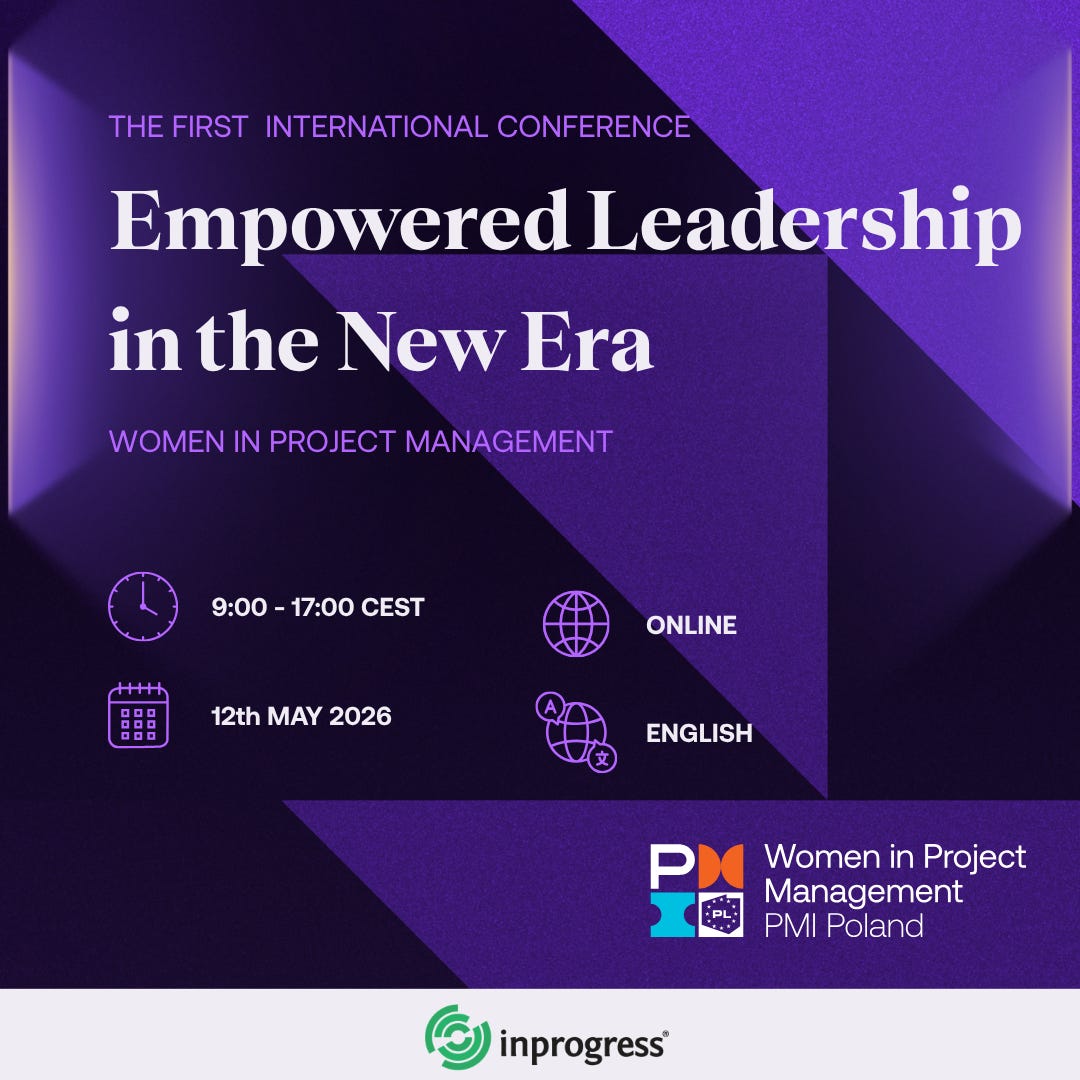
Held in English and 100% virtual, conference topics include: leadership, soft skills, resilience, sisterhood, barriers women face in career development, elements of AI, and the ability to navigate technological and social change.
The agenda includes presentations from outstanding speakers from Europe - practitioners who not only share knowledge, but also inspire and demonstrate how to turn it into real action. Participants can expect a solid dose of expertise, fresh perspectives, and experiences from different industries and cultures. Among them are keynote speaker Bruno Morgante and speakers Yasmina Khelifi, Laura Neuwirth, and Liz Hector.
Register here.
A lesson
This week’s lesson is about something PMI-CPMAI isn’t going to teach you: “the meta-skill of reading context”. For most generalists, this is instinctive but unrefined. In a recent article John Cutler suggests that if you invest in refining this meta-skill, you might just blow the AI playbook wide-open in every organization you touch.
Understanding why something worked or didn’t in a specific context is a skill unto itself. Understanding the influence of context on practices has always been a superskill.
And it’s even more important now.
This is a journey that is not for the faint of heart. John points out something we are all feeling and not saying:
This is also a huge emotional journey. When a practice you mastered needs to be retired, it’s not just a workflow change. It’s a huge and unsettling professional identity hit. People built careers and reputations around these things. Letting go is real.
So how can we navigate the journey?
The way through isn’t to cling to who you were or to perform who you think you’re supposed to become. It’s to stay in the work, let your identity shift with what you’re learning, and be open to the possibility that the most important practices haven’t been invented yet.
In short, generalists are poised to travel this road more easily and more quickly than others because our natural adaptive learning style means we are often comfortable with the kind of ambiguity we will encounter and we’re ok to just see it through and learn along the way. This is a lesson we can practice. It is also a lesson we can teach. Both will be tremendously valuable to the future ahead.